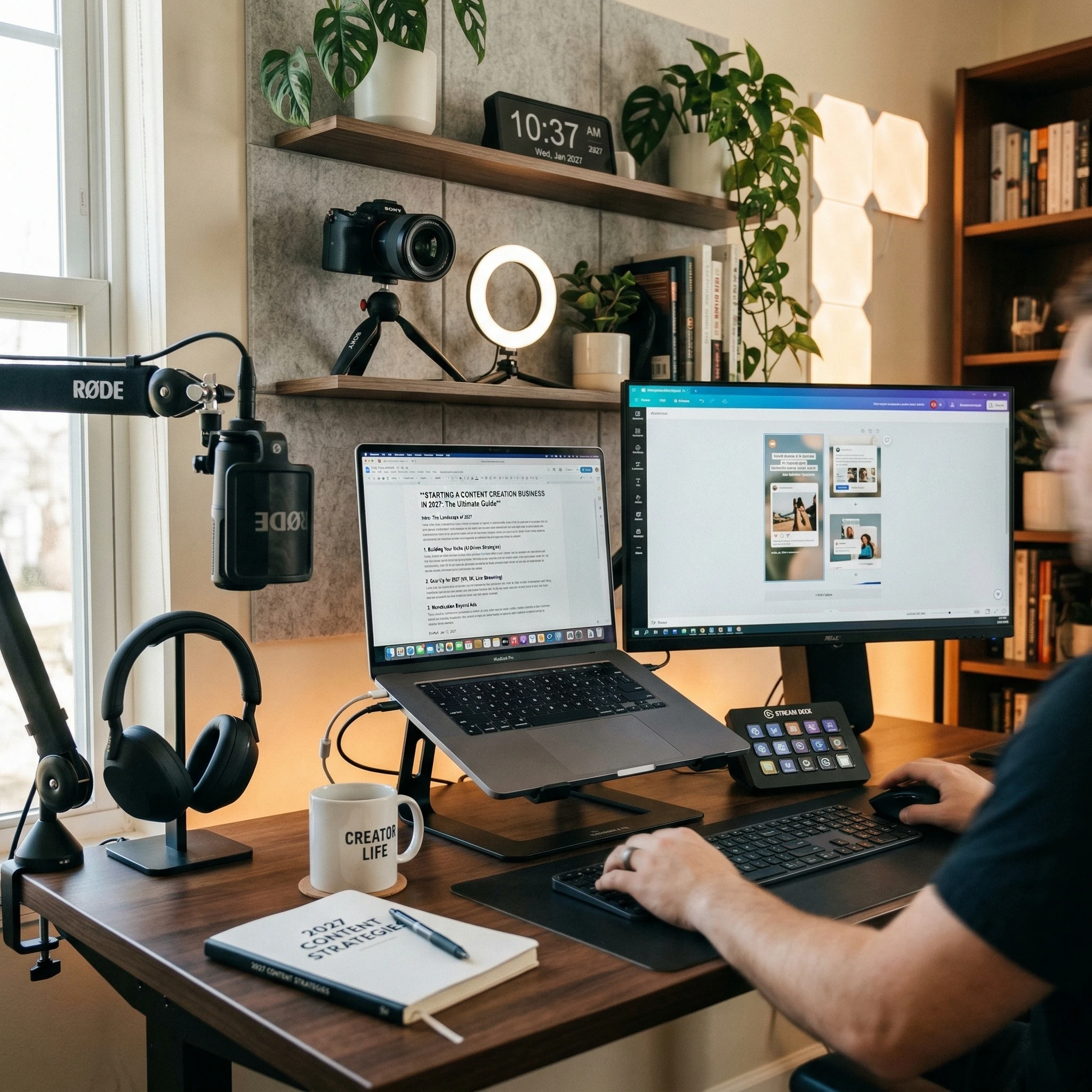
Working as a content creator in 2027 means building something that lasts past any single platform’s changes. A website you own, a topic you can write about for years, and more than one way to earn from it make a creator’s income steadier than a following on one app. This guide walks through the five parts of that build, in the order most people need them.
Why Become a Content Creator in 2027?
People still search for answers, recommendations, and explanations from someone who knows the topic. A creator who answers those questions clearly can reach readers on a website, in search results, on video platforms, and through email.
The range of subjects is wide: tech reviews, cooking, personal finance, faith and family, hobbies, and professional skills. Because so many people publish, a clear focus and a recognizable point of view matter more than reach alone. You also have more than one way to be paid for the work, which is why this path appeals to anyone who wants income beyond a single paycheck.
1. Choose a Niche You Can Sustain
A niche is the specific group of people you write for and the problems you help them solve. Broad topics like “health” or “money” put you in competition with every large publisher. A narrower topic, such as budgeting for single-income families, gives you a defined reader and a clear set of questions to answer.
Test a possible niche with three questions:
- Can you list 50 questions people ask about this topic?
- Do you stay interested in it when the novelty wears off?
- Are there products, services, or skills connected to it that people pay for?
If the answer to all three is yes, you have enough material to publish for a long time. For a deeper walkthrough, read how to choose a profitable niche for affiliate marketing.
2. Build a Website and Pick Your Social Platforms
Your website is the one place you control completely. Your articles, your email list, and your offers live there, and no platform can change the rules on you. Start with a simple site and add to it as you publish.
Social platforms send readers to that site. Choose one or two where your audience already spends time, whether that is YouTube, Instagram, TikTok, or LinkedIn, and adapt each post to the platform’s format. Posting steadily in two places works better than posting sporadically in five. If you are unsure what to set up first, what a lean creator setup needs lists what to buy and what to skip.
3. Publish Content That Solves a Problem
Readers come back to pages that answer their question fully. Before you publish a piece, ask what the reader will be able to do after reading it that they could not do before.
Good content usually has these traits:
- It addresses one clear question or problem.
- It gives specific instructions, examples, or comparisons.
- It states a point of view, so it reads as written by a person.
- It is accurate, and says so when you are unsure.
Choose a schedule you can keep, such as one article a week or two short videos a week, and hold to it. Readers and search engines both respond to a site that keeps publishing. For more on why written content still pays off, see why blogging still matters.
4. Get Your Content Found
Publishing is half the work. Search engine optimization (SEO) is how your pages appear when someone types a question into Google. It starts with keyword research: finding the phrases your audience actually searches, then writing a page that answers each one directly.
Use the main phrase in your headline and early in the text, write a clear title, and make sure your site loads quickly and works on a phone. Share each new piece on your social accounts, reply to comments, and invite readers to join an email list so you can reach them directly when you publish something new.
5. Add Income Streams
Once readers trust your site, there are several ways to earn from it:
- Affiliate marketing: you recommend a product or service and earn a commission when someone buys through your referral link.
- Sponsored content: brands pay you to feature their product.
- Digital products: guides, templates, or courses you create yourself.
- Services: consulting or coaching built on what you have learned.
Affiliate marketing is a practical first stream because you do not need to create a product or handle customer support. You only need an audience and honest recommendations. As your skills grow, you can add the other streams. Strategies for building a sustainable creator income covers how to combine them.
Where Wealthy Affiliate Fits
Building a site, learning SEO, writing useful content, and setting up affiliate income are separate skills, and learning each one on its own takes time. Wealthy Affiliate puts lessons, website hosting, keyword research tools, and a community of members in one place, so you can learn a skill and apply it on your own site right away.
That also helps if you want to stop paying others to do work you can learn yourself, such as building a site or writing optimized articles. Each skill you pick up becomes something you can use for your own income. Learn to earn as a creator, one skill at a time shows how that works in practice.
Start Planning Your 2027
A content creator in 2027 needs a focused niche, a site of their own, helpful content published on a schedule, and more than one income stream. None of these requires you to do everything at once. Begin with the niche, publish your first article, and build from there.
Which skill would add the most to your income next year: writing, SEO, video, or affiliate marketing, and what is the first thing you would do to start building it?

Such a motivating and beginner‑friendly guide! I love how you broke the content‑creator journey into simple, actionable steps without making it feel overwhelming. Your focus on authenticity, niche clarity, and consistency really stands out—especially in a digital world that changes so fast. The reminders about building a true community rather than just chasing numbers were especially grounding.
I’m curious—out of all the steps you shared, which one do you think new creators tend to skip or underestimate the most?
This is such a comprehensive and inspiring guide! I love how it breaks down the content creator journey step by step, especially emphasizing the importance of finding a niche and providing real value. In 2026, authenticity truly sets creators apart, and your advice on building an online hub and leveraging social media strategically really resonates. I also appreciate the focus on community engagement, so often overlooked, yet it’s the key to long-term growth and loyal followers. Monetization tips, particularly affiliate marketing and digital products, provide practical ways to turn passion into income without losing authenticity. Highlighting tools like Wealthy Affiliate is helpful for beginners who need structured guidance. Overall, this guide makes the content creation path feel achievable while encouraging creativity and consistency. It’s a motivating roadmap for anyone serious about building a sustainable, impactful online presence.
As someone in my late 50s, I find this topic especially interesting because more people in my age group are starting to explore online content. Not necessarily to “go viral,” but to share experiences, hobbies, or even build a small side income. Your point about authenticity says much. I think that’s something we can genuinely offer. Real-life experiences, consistency, and a more grounded perspective.
One thing I’m curious about. Do you think it’s harder for beginners today to stand out with so much content already out there, or do you feel there’s still plenty of room for new voices if they stay consistent and focused on their niche?
Simple introduction and outline for how to get started. Was looking for some basic information and how to get started. Really curious to put see how it all works and to put in action. Will be checking out and get it going. I have a good idea of what niche I would like, but will wait to make sure I am positive. I realize my biggest hurdle will be getting my social media going, and putting together a good overall plan.